
Phesi releases 2023 analysis of clinical development; breast cancer remains most studied disease area for third year
January 16, 2024 – Clinical Trials – Phesi, clinical development, clinical trials, data analysis
Annual analysis of data from 95 million patients shows signs of post-pandemic recovery for clinical development industry, but trial cancellation rates at phase 2 remain high
16 January 2024 — Massachusetts, US — Phesi, a global provider of patient-centric data analytics, has today released the results of its annual global analysis of all clinical trials conducted in 2023, using data from its Trial Accelerator platform. The analysis of 65,749 recruiting clinical trials reveals that breast cancer is the most studied disease for the third consecutive year, followed by solid tumours (Fig. 1). The top five most studied disease areas with the most recruiting sites have stayed the same for two consecutive years but, in 2023, the ranking of disease areas has changed. This year, stroke was the third most studied disease area, COVID-19 was fourth and prostate cancer was fifth. Phesi’s analysis also revealed that the US is home to 33% of the 115,000 recruiting investigator sites from interventional trials around the world – with as many sites as the next top seven countries combined.
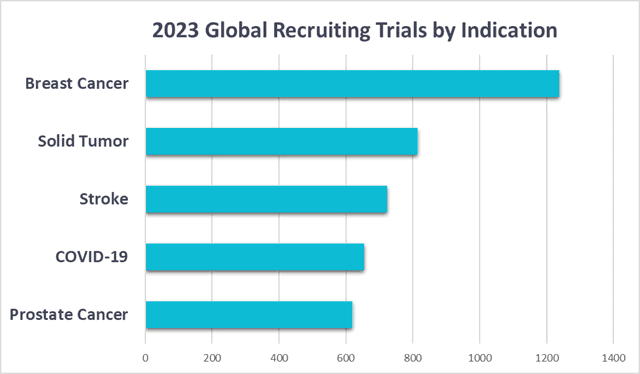
“The positive news is there has been an increase in trial recruitment across all the top five indications in 2023. What has been especially notable is the increase in solid tumour trials – these are likely to be the foundation of innovative cancer therapies, and investment in this area is a promising sign for patients,” explained Dr Gen Li, president, Phesi. “Meanwhile, we have seen a marked reduction in investment into COVID-19 therapies in 2023, likely due to there being fewer available patients. The prospective market for COVID therapies is less attractive for investment, and we expect to see this downward trend to continue.”
The analysis also revealed that the increased attrition rate at phase 2 identified by Phesi’s analysis in 2022 persists (Fig. 2). In 2023, 28% of clinical trials were cancelled during phase 2 – a rate that averaged around 20% before the pandemic. These high levels of attrition at phase 2 may slow the rate at which new therapies reach market and are likely to have an ongoing effect on the clinical development industry, adding to rising costs. Moreover, it is likely that phase 3 cancellations will rise in the coming years; trials that struggled to meet goals during phase 2 have a higher likelihood of not reaching the end of phase 3 successfully.
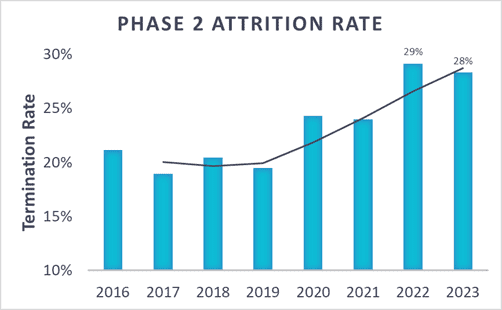
“While there was a slight improvement in cancellation rates in the second half of the year, the data indicate that 2024 will pose further challenges to portfolio managers and trial planners. Ultimately, the clinical development industry is beginning to recover from the pandemic, but we can expect the long-term impact to stretch into 2025,” commented Dr Li. “To minimise the impact of disruption, there is a growing need for trial design and execution to become more data-led. Using predictive analytics in protocol design, simulating trials and using digital patient profiles will reduce unnecessary amendments, accelerate development and, importantly, get therapies to patients faster.”
About Phesi
Phesi uses the world’s largest clinical trial database to simulate clinical development and improve decision making. With AI-driven solutions for patient profiling, trial simulation, protocol design and digital control arms available to support life sciences companies in accelerating drug development and commercialisation. Find out more at: www.phesi.com.

